
Fiber is a carbohydrate that your body cannot fully break down. Unlike other carbs that turn into sugar and get absorbed quickly, fiber moves through your digestive system mostly intact. That slow journey is exactly what makes it useful for weight loss.
There are two main types of fiber, and both play a role. Soluble fiber dissolves in water and forms a gel-like substance in your gut. This gel slows down digestion, which means sugar enters your bloodstream more gradually instead of all at once. Insoluble fiber does not dissolve. It adds bulk to your stool and helps food move through your intestines faster. Together, they keep your digestive system running smoothly while helping you manage hunger.
The feeling of fullness that fiber creates is not just a physical sensation. When you eat fiber, your stomach empties more slowly. You stay satisfied longer, and you are less likely to reach for a snack an hour after a meal. The American Heart Association notes that high-fiber foods often require more chewing, which gives your body extra time to recognize that you are full before you high fiber foods for weight loss.
Why Fiber Helps With Weight Loss?
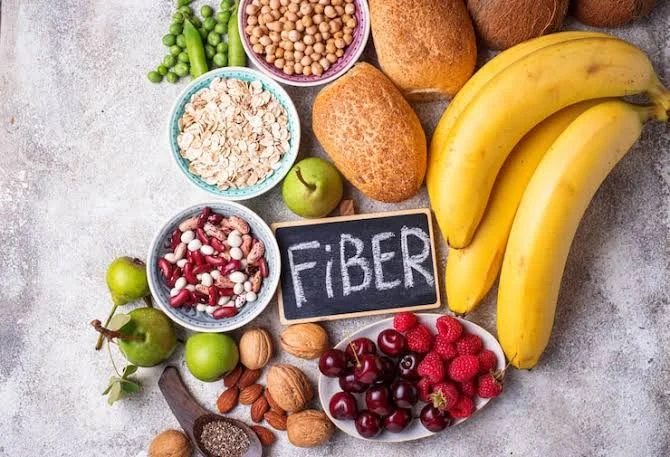
Fiber supports weight loss through several mechanisms that work together. Understanding these mechanisms helps you see why simply adding a fiber supplement to an otherwise poor diet will not solve the problem.
It keeps you full with fewer calories. Foods rich in fiber tend to be lower in calories for the same volume. A cup of raspberries has about 8 grams of fiber and roughly 65 calories. A cup of potato chips has almost no fiber and well over 150 calories. When you fill your plate with high-fiber foods, you eat a larger volume of food for fewer calories, and you feel more satisfied afterward.
It slows sugar absorption. When you eat refined carbohydrates without fiber, your blood sugar spikes quickly and then crashes. That crash triggers hunger and cravings. Fiber prevents this spike-and-crash cycle by slowing the release of sugar into your bloodstream. Stable blood sugar means steadier energy and fewer urgent hunger signals.
It feeds your gut bacteria. Some types of fiber are prebiotics, which means they feed the beneficial bacteria in your gut. A healthy gut microbiome is linked to better digestion, lower inflammation, and improved metabolic health. Research on fiber and weight shows that people who eat more fiber tend to have less visceral fat, the dangerous fat that wraps around your organs.
It increases fat burning. A study highlighted by Nutrition Facts found that when short-chain fatty acids (which your gut bacteria produce when they ferment fiber) were infused into participants, their fat oxidation increased by more than 25% within two hours. This means fiber may help your body burn fat more efficiently, even at rest.
A systematic review of randomized controlled trials confirmed a significant link between dietary fiber and reductions in body weight, BMI, and body fat percentage. The evidence is strong enough that health organizations now treat fiber as a core component of weight management, not just a digestive aid.
How Much Fiber You Need Each Day?
The general recommendation for adults is 25 to 30 grams of fiber per day. More specifically, the Dietary Guidelines suggest 25 grams for adult women and 38 grams for adult men, though these numbers drop slightly after age 50.
Here is the uncomfortable truth: less than 5% of Americans meet their daily fiber needs. Most people eat around 15 grams per day. That gap of 10 to 15 grams is where the opportunity lies. You do not need to overhaul your entire diet. You just need to close that gap consistently.
If you are actively trying to lose weight, aim for at least 28 grams per day. Some experts recommend spreading your fiber across all meals and snacks, with a goal of at least 8 grams of fiber per meal. This steady intake throughout the day keeps hunger under control better than loading up on fiber at dinner.
Read Also: Weight Loss Tips for Women with Slow Metabolism
High-Fiber Foods That Support Weight Loss
The best high-fiber foods for weight loss are whole foods that also provide vitamins, minerals, and water. Fiber supplements can help in a pinch, but they do not come with the same package of nutrients.
Legumes and Beans
Legumes are fiber champions. One half-cup of cooked navy beans provides 9.6 grams of fiber. Black beans deliver 7.7 grams per half-cup, and lentils offer about 7.8 grams. Kidney beans contain 9.3 grams per 95-gram serving. These foods also pack protein, which makes them especially filling. Add beans to soups, salads, tacos, or grain bowls.
Edamame, which are immature soybeans, provide 4 grams of fiber in a half-cup of cooked servings. They are also one of the few plant foods with all the amino acids your body needs.
Berries
Raspberries lead the fruit category with 8 grams of fiber per cup. Blackberries are close behind at 7.5 grams per cup. Both are low in sugar and high in antioxidants. Frozen berries work just as well as fresh and often cost less. Add them to yogurt, oatmeal, or smoothies.
Whole Grains
Barley contains 6 grams of fiber per cooked cup. Oats provide 5.5 grams per cup. Quinoa offers 5 grams per cup. The key is choosing whole grains that retain their bran, the outer layer where fiber is concentrated. Refined grains like white bread and white rice have had that layer removed, along with most of their fiber.
One important note: pearl barley is a refined grain and contains less fiber than hulled or dehulled barley. Check the label when you buy.
Vegetables
Green peas deliver 4.5 grams of fiber per half-cup boiled. Brussels sprouts provide 4 grams per cooked cup. Artichoke hearts contain 3.5 grams per half-cup. Broccoli offers 2.5 grams per half-cup cooked and chopped. The stalks of broccoli are just as fibrous as the florets, so do not toss them.
Fruits With Skins
Pears with the skin on provide about 5 grams of fiber each. Apples with skin offer around 4.5 grams. The skin is where much of the insoluble fiber lives, so peeling removes a significant portion of the benefit. Eat them whole when you can.
Seeds and Nuts
Chia seeds are remarkably dense in fiber, with about 39 grams per half-cup. You do not need that much at once. A single tablespoon mixed into yogurt or oatmeal adds several grams. Almonds with skin provide 3.3 grams of fiber per 30-gram serving. Sunflower seeds offer 2.6 grams per 20 grams. These are easy to sprinkle on salads or eat as a snack.
A Simple Table of Fiber Content
| Food | Serving | Fiber |
|---|---|---|
| Navy beans, cooked | ½ cup | 9.6 g |
| Kidney beans, cooked | 95 g | 9.3 g |
| Lentils, cooked | ½ cup | 7.8 g |
| Raspberries | 1 cup | 8 g |
| Blackberries | 1 cup | 7.5 g |
| Chickpeas, cooked | 95 g | 7.2 g |
| Barley, cooked | 1 cup | 6 g |
| Oats, cooked | 1 cup | 5.5 g |
| Pear, with skin | 1 medium | 5.5 g |
| Apple, with skin | 1 medium | 4.5 g |
| Green peas, boiled | ½ cup | 4.5 g |
| Brussels sprouts, cooked | 1 cup | 4 g |
| Edamame, cooked | ½ cup | 4 g |
| Artichoke hearts, cooked | ½ cup | 3.5 g |
| Broccoli, cooked chopped | ½ cup | 2.5 g |
Sources: Cleveland Clinic, American Heart Association, Dietary Guidelines
How to Add Fiber Without Feeling Miserable?
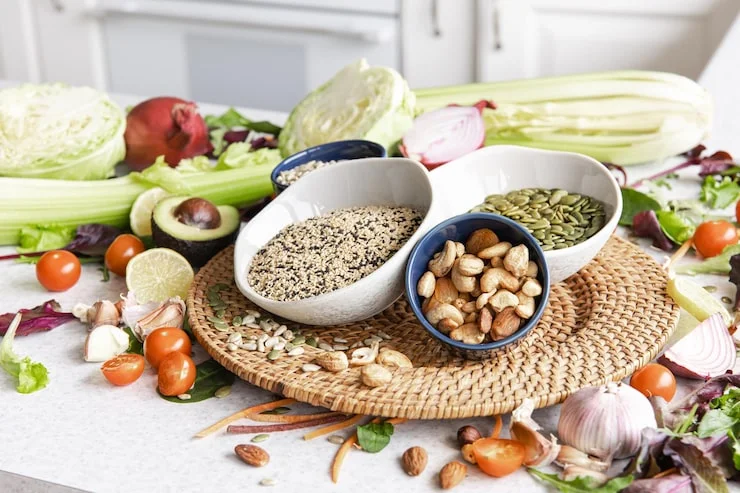
Adding too much fiber too quickly is a recipe for bloating, gas, and cramping. Your digestive system needs time to adjust. The solution is to increase gradually.
Go slow. Add about 5 grams of fiber per day, not 20. Give your gut a week or two to adapt before adding more.
Drink more water. Fiber needs water to do its job. Without enough fluid, fiber can actually make constipation worse instead of better. Aim for at least six to eight cups of water daily as you increase your fiber intake.
Focus on food first. Whole foods give you both soluble and insoluble fiber along with vitamins and minerals. Supplements can help, but they are not a replacement for real food.
Spread it out. Rather than eating all your fiber at dinner, include a fiber-rich food at every meal. A spoonful of chia seeds in your morning yogurt, beans in your lunch salad, and roasted vegetables at dinner adds up without overwhelming your system at once.
Ease in with breakfast. Oatmeal with berries and a spoonful of ground flaxseed is one of the easiest high-fiber breakfasts. It delivers around 10 grams of fiber and high fiber foods for weight loss.
Read: Home Workouts That Burn Fat Without Equipment
Frequently Asked Questions
Does fiber help you lose belly fat specifically?
Yes. Research shows that for every 10 grams of soluble fiber added to your diet, visceral fat gain drops by nearly 4%, even without other changes. Visceral fat is the deep belly fat linked to diabetes and heart disease, so this matters for health beyond appearance.
Can I take a fiber supplement instead of eating high-fiber foods?
Supplements can help, but whole foods are better. They provide a mix of fiber types plus vitamins, minerals, and antioxidants that supplements lack. If you struggle to get enough fiber from food, psyllium husk is one of the more effective supplement options.
Will fiber make me bloated?
It can if you add too much too fast. Start with a small increase, drink plenty of water, and give your body time to adjust. If bloating persists, talk to a doctor, especially if you have conditions like IBS or Crohn's disease.
Is fiber really like a natural Ozempic?
Fiber does stimulate GLP-1, the same hormone that weight loss medications mimic. But the effect is much milder. Fiber supports appetite control through multiple pathways, but it is not a medication replacement. Think of it as one powerful tool in your overall approach.
How long does it take for fiber to help with weight loss?
Some effects, like feeling fuller after meals, happen immediately. Changes in body weight and fat take weeks or months of consistent intake. The research showing 25% increases in fat burning involved acute infusions, not long-term dietary changes, so patience matters.
Putting It All Together
Fiber is not a magic bullet, but it is one of the most reliable and evidence-backed tools for weight loss. It reduces hunger, stabilizes blood sugar, feeds your gut, and may even help you burn more fat. The foods that contain fiber—beans, berries, whole grains, vegetables, and fruits—are exactly the foods that should form the base of any weight loss diet.
Start by adding one high-fiber food to a meal you already eat. A handful of berries on your yogurt. A half-cup of beans in your soup. A pear instead of a cookie for an afternoon snack. These small additions add up. Before long, you will be hitting 25 to 30 grams per day without counting or stressing. Your hunger will be more manageable, your energy steadier, and your weight loss efforts a little bit easier.